Review Article | | Peer-Reviewed

‘Risala Tahaffuz Min al-Nazla’, Al-Rāzi’s Legacy in Cold Remedy and Prevention

Received: 23 October 2024     Accepted: 9 November 2024     Published: 13 December 2024
Views:       Downloads:
Abstract

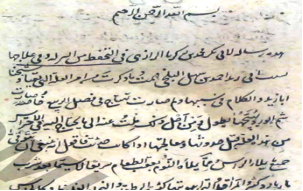
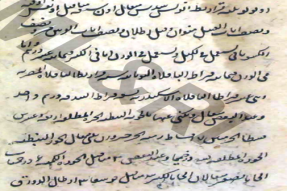
Nazla (Catarrh) is a condition in Unani medicine that involves the flow of catarrhal fluids, or mucus, from the brain downwards into the throat and chest, leading to symptoms similar to what we consider a cold today. This condition is characterized by congestion, irritation in the respiratory pathways, and in some cases, can progress to more serious respiratory complications if left untreated. While preparing a detailed catalogue of Unani medical manuscripts housed at the Telangana Government Oriental Manuscripts Library and Research Institute (TGOMLRI) in Hyderabad, a significant discovery was made: a concise yet vital manuscript titled Risala Tahaffuz min al-Nazla (A Treatise on the Prevention of Cold and Catarrh), cataloged under Accession No. 8880. This manuscript, written by the eminent physician Muhammad ibn Zakariyyā al-Rāzi (865–925 AD), offers invaluable insight into the traditional understanding and prevention of the common cold. Al-Rāzi, also known as Rhazes in the Latin world, was one of the most influential figures in the history of medicine, contributing profoundly to clinical practices and medical theories that remained relevant for centuries. This treatise, written in Arabic, reflects al-Rāzi's keen focus on preventive medicine, specifically on measures to avoid the onset of cold and catarrhal conditions. It is a paper manuscript, notable for its brevity, consisting of only 8 pages. Each page contains 14 lines, with an average of 16 letters per line, displaying a compact and highly structured layout that suggests its use as a practical guide. Its focus on prevention rather than solely treatment is particularly notable, as it aligns with al-Rāzi’s broader medical philosophy emphasizing lifestyle and precautionary health measures. Moreover, Risala Tahaffuz min al-Nazla outlines remedies based on herbal medicine, prescribing specific herbs and natural compounds known to alleviate symptoms of cold and prevent its occurrence. These herbal prescriptions include ingredients that are easily available in Unani medicine and have historically been used for their anti-inflammatory, expectorant, and warming properties, which can relieve respiratory congestion and discomfort. Interestingly, another copy of this treatise exists in Iran, underscoring the historical and scholarly connections between Indian and Persian centers of Unani medicine. This manuscript’s discovery in Hyderabad adds to the rich collection of Unani medical texts in India, showcasing the traditional medical knowledge that continues to be studied for its relevance to modern alternative medicine practices. Through such manuscripts, Unani medicine remains an enduring part of the cultural and scientific heritage in regions with strong historical ties to Persian medical traditions. The concise nature of Risala Tahaffuz min al-Nazla and its practical content makes it a valuable text for both historical research and contemporary applications, providing insights into how ancient Unani physicians approached the common cold with holistic, plant-based remedies.

Published in Science Journal of Clinical Medicine (Volume 13, Issue 4)
DOI 10.11648/j.sjcm.20241304.12
Page(s) 71-75
Creative Commons

This is an Open Access article, distributed under the terms of the Creative Commons Attribution 4.0 International License (http://creativecommons.org/licenses/by/4.0/), which permits unrestricted use, distribution and reproduction in any medium or format, provided the original work is properly cited.

Copyright

Copyright © The Author(s), 2024. Published by Science Publishing Group

Keywords

Risala Tahaffuz Min an al-Nazla, Muhammad ibn Zakariyyā al-Rāzi, Unani Medicine, Manuscript

1. Introduction
During the preparation of descriptive catalogue of the Unnai manuscripts, I came across a particularly important manuscript titled “Risala Tahaffuz an al-Nazla” (The Treatise on the Common Cold) written by al-Rāzi, with Accession No. 8880, preserved in Telangana Government Oriental Manuscripts Library and Research Institute (TGOMLRI), Hyderabad. This treatise, written in Arabic, focuses on the prevention of the common cold and consists of 8 pages, with 14 lines per page and 16 letters per line. Another copy of this treatise also exists in Iran.
Dr. Raziul Islam Nadwi had translated this manuscript into Urdu, which was published in Aligarh in 1995. Recognizing the treatise's significance, so I realized to translate it into English from Arabic to make it accessible to a broader audience. This translation would not only honour al-Rāzi's contributions to medicine but also provide valuable insights into historical medical practices and preventive care.
Raziul Islam Nadwi mentions that the treatise “Risala Tahaffuz min al-Nazla” remained hidden till now. Al-Rāzi wrote it for his philosophy teacher, Abu Zayd Ahmad ibn Sahl al-Balkhi (850 - 934 CE), who suffered from the common cold every spring season. This treatise did not gain recognition as a separate work. Only Ibn Sarabiyun ibn Ibrahim mentioned it in his sole book “Al-Fusul al-Muhimma fi Tibb al-Ummah”. Unfortunately, only one incomplete copy of Ibn Sarabiyun's book exists. Little is known about Ibn Sarabiyun's personal life, but since he frequently mentions Ibn Sina (Avicenna), who died in 1037 CE, in his book, it can be inferred that the book was not written before the latter half of the 11th century CE.
Al-Rāzi's treatise is included in the Oxford manuscript collection number 461, pages 786-806. Raziul Islam Nadwi provides evidence that the earliest attribution of this treatise to al-Rāzi can be found in Al-Biruni's work. Al-Biruni, in one of his treatises listing al-Rāzi's works, mentions at number 38: "A treatise on the description of nasal congestion which used to affect Abu Zayd during the blooming season of roses." Apart from Al-Biruni, only Ibn Abi Usaibi'a (d. 1270 CE) in his book “Uyūn al-Anbāʾ fī Ṭabaqāt al-Aṭibbāʾ” refers to it, writing: "A treatise on the disease which caused Abu Zayd al-Balkhi to suffer from a cold when he smelled roses in the spring season."
These references suggest that al-Rāzi's teacher was likely the same Abu Zayd Ahmad ibn Sahl al-Balkhi (850-934 CE) who is globally renowned for his geographical and philosophical works. Al-Balkhi studied philosophy, astrology, astronomy, medicine, and physical sciences in Iraq. He is believed to have been the first to diagnose that mental illness can have psychological and physiological causes and was the first to typify four types of emotional disorders: fear and anxiety; anger and aggression; sadness and depression; and obsessions.
1.1. Abū Bakr Muhammad ibn Zakariyyā al-Rāzi (865-925 AD)
A great Muslim physician of the Islamic Golden Age, often known as al-Rāzī or by his Latin name Rhazes, gained immense fame in the Medieval Latin era due to his works “Kitab al-Hawi”, “Kitab al-Mansuri”, and “Kitab al-Judari wal-Hasbah” (Smallpox & Measles). Al-Rāzi was a comprehensive thinker who made fundamental and enduring contributions to various fields, particularly in medicine, which he documented in over 200 manuscripts. His observations and discoveries have left a lasting impact on the field. Al-Rāzi was an early proponent of experimental medicine, emphasizing the importance of empirical observation and experimentation in medical practice. His approach allowed him to make significant advances in the understanding and treatment of various diseases. Among his many achievements, he is particularly celebrated for being the first to clinically distinguish between smallpox and measles, two diseases that were often confused before his time. His clear differentiation between these ill led to more effective treatments and better patient outcomes. In addition to his clinical work, al-Rāzi served as the chief physician at the hospitals of Baghdad and Ray, two of the most important medical centres of his time. His reputation as a skilled and compassionate clinician attracted patients and students from diverse backgrounds. Al-Rāzi was dedicated to the service of his patients, regardless of their social or economic status, and he was known for his kindness and commitment to their well-being. As a teacher, al-Rāzi had a profound influence on the development of medical education. He welcomed students of all backgrounds, fostering an inclusive environment where knowledge was shared freely. His teaching methods and medical writings laid the groundwork for future generations of physicians and scholars.
1.2. Risala Tahaffuz Min al-Nazla (A treatise on Prevention of cold and Catarrh)
Muhammad ibn Zakariya al-Rāzi writes that Shahid bin al-Husayn al-Balkhi corresponded with him seeking advice regarding the health concerns of Abu Zayd Ahmad ibn Sahl al-Balkhi. In response, Razi acknowledged his understanding of Abu Zayd's illness, particularly its triggers during the spring season and exacerbation upon exposure to rose scents. Razi offered specific recommendations aimed at both preventing and managing the illness:
1) Avoid factors that contribute to sinus congestion.
2) Refrain from sleeping immediately after meals, especially after consuming large quantities of cold water.
3) Avoid sleeping in excessively humid or poorly ventilated environments such as dark rooms, basements, or damp houses.
4) Minimize exposure to cold air, particularly when the body is chilled or immediately after meals.
5) Limit excessive talking and exposure to loud noises.
6) Manage stress levels and avoid excessive worry.
7) Refrain from wearing tight collars or using pillows while sleeping.
8) Use caution with cold water during bathing,
9) Avoid long hairs and applying astringent oils or hair dyes.
These recommendations, tailored to Abu Zayd's specific condition and seasonal triggers, aimed to alleviate symptoms and prevent flare-ups during the rose blooming season.
Here's the continuation and revision of Razi's advice:
Avoid inhaling substances known for emitting strong vapours, such as roses and Shahsfarm (Ocimum Basilicum), due to their extreme delicacy.
Refrain from inhaling substances that induce sneezing, especially when the body and stomach are full.
Avoid using substances that may cause heaviness in the head and drowsiness, such as Luffāḥ (Mandrake, Mandragora officinarum), Maiyáh Saila (Styrax officinalis Linn.) and saffron.
Stay away from foods that generate excessive vapours, including Baqila (Vicia feba Linn., Fava vean), fish, Frakh (Chickens), onions, Kurras (Leek, Allium ampeloprasum), garlic, Jarjeer (Water cress, Nasturtium officinale W.T.).
To alleviate symptoms, it is beneficial to incorporate practices that lighten the head, such as significant weight loss in early to mid-spring. Use substances that aid in expelling accumulated moisture from the body, attributed to winter diets, beverages, and sleeping in humid, vaporous, or smoky environments. Additionally, sleeping on one's back is advisable.
Use a nasal straw to induce sneezing, facilitating drainage towards the nose. Clean the nostrils multiple times daily and inhale steam from a decoction of Namam (Thymus serpyllum, wild thyme and mint water), Babunaj (Chamomile, Matricaria chamomilla Linn.), Futanj (mint), and Sheeh (Artemisia aethiopica L., wormwood). This approach helps to mature and dissipate nasal congestion.
These additional measures, recommended by Razi, aimed to further manage and alleviate the specific health challenges faced by Abu Zayd during periods of seasonal blooming.
This comprehensive advice from Razi was intended to manage chronic cold symptoms and prevent exacerbation, particularly during the rose blooming season.
Before sleeping, take measures to prevent mucus from descending into the chest. During deep sleep, especially while lying on the back for extended periods, mucus tends to accumulate in the chest, potentially causing hoarseness, coughing, shortness of breath, and even fever, even in small amounts. To address this, focus on facilitating the expulsion of accumulated chest mucus using expectorant remedies like Zufa (hyssop) decoctions, which soften and cleanse the chest, preventing lung damage from severe coughing. Additionally, prevent mucus from descending into the chest and ascending towards the head by massaging and warming the head.
In cases where there is a risk of Eustachian tube blockage due to excess mucus, shaving the head and applying substances like mustard or onion juice, known for their volatile properties, can induce sneezing and help move mucus towards the nose.
This guidance by Razi aimed to mitigate symptoms and prevent complications associated with seasonal exacerbations of chronic cold, specifically tailored to Abu Zayd's condition and health challenges.
Inhale warm vapours from substances like black seed (Nigella sativa), onion, and mustard, and gargle with solutions that strengthen the laryngeal muscles. Avoid using cold water and rose water, opting instead for remedies that prevent mucus from descending, such as Sharbat Khaskhash (poppy syrup) and lozenges containing poppy, Kateera (tragacanth), gum Arabic, quince seed mucilage, Bazr Qatuna (plantain seeds), Enab al-Salab (gooseberry, black nightshade, Solanum nigrum Linn.) and purslane extract. In cases of severe cough distress, administer medications containing opium, cannabis, Kundur (frankincense), and Armenian bole.
To address accumulated chest mucus, massage with Khairi (Gilly flower) oil or Babuna oil, followed by gentle warm compresses. Keep the patient in a spacious, cold-free environment or provide a mild bath with warm water to facilitate effective expulsion of chest mucus and promote recovery. Strengthen overall health with Qati (remover of viscous humour) and detergent medications such as barley water, honey water, sugar water, and figs.
Gargle with warm water and a decoction of Mawiz Munaqqa (Vitis Vinifera Linn, raisins), Aslus Sus (Glycyrrhiza glabra Linn. Licorice) and Persiaoshan (Adiantum capillus veneris Linn.).
If symptoms worsen, consider medications made from Hulba (fenugreek), Farasiyun (Marrubium vulgare Linn. Horehound, Lycium), Anjarah (Utangan, Urtica pilulifera), Ersa (Iris ensata Thunb.), pepper, and mustard.
This advice from Razi was handmade to manage severe coughing and chest congestion effectively, aiming to alleviate symptoms and promote recovery.
A person experiencing nasal congestion, frequent sneezing, and nasal discharge may find relief using the aforementioned remedies. Activities such as walking, inducing sweat through bathing, and applying cupping therapy on the Nuqra (nape of the neck) have proven beneficial for many individuals. Some have found relief through Faṣd-i-Qīfāl (venesection of cephalic vein), blood-letting of the temporal and frontal arteries, Faṣd-i-Usaylim (blood-letting from third dorsal metacarpal vein) which alleviates congestion and enhances blood flow through these veins, often felt pulsating against the bones. These individuals may also experience facial redness and warmth.
For those with milder symptoms but still experiencing facial redness and slight vein congestion, venesection of the nose veins is recommended. Additionally, using substances that thicken blood and impart cooling effects, such as vinegar, lentils, sour unripe grapes (Hisrim), Hummaz (Sorrel, Rumex acetosa Linn.) of citron (citric acid) and Ribas (Gooseberry, Rheum emodi Wall.), can be beneficial. Cooling vinegar and rose water applied several times to the scalp have also provided relief in some cases.
Once, I placed ice cubes on someone's scalp at a gathering, suddenly something strange emerged, and they felt intense cold spreading inside their head, which continued to trouble them. That night, they had a mild cold, and later, they treated it the same way. However, they didn't benefit immediately. Subsequent treatments included managing symptoms through methods like severe purgation, walking, and fasting, which provided significant relief. Treatment remains challenging for individuals with thick neck veins.
For those highly sensitive to the scent of roses, inhaling musk, Qust (Costus root, Dolomiaea costus (Falc.), and Murr (Commiphora myrrha Nees.), and incorporating scents of Ban (Sweet Basil, Ocimum basilicum Linn.) and Sausan (Iris florentina Linn., Orris root) inside the nostrils, has proven beneficial.
This advice from historical practices, attributed to Razi, outlines various treatments and remedies aimed at managing nasal congestion, sneezing, and related symptoms, tailored to individual sensitivities and conditions.
"All praise belongs to Allah alone, and blessings and peace upon the greatest being in creation, Muhammad Mustafa (peace be upon him), and upon his family and companions."
This conclusion reflects the traditional Islamic expression of gratitude and blessings upon the Prophet Muhammad and his family, commonly found in scholarly works and treatises.
2. Discussion
This treatise by al-Rāzi represents a significant milestone in medical history as one of the earliest comprehensive discussions focused on a single disease. The author meticulously examines the causes and diagnostic signs of this condition, which modern medicine would identify as "Allergic Coryza," commonly known today as "Hay fever" or "Pollinosis," and medically termed Vasomotor Rhinitis. Vasomotor rhinitis occurs due to inflammation of nasal tissues, resulting in uncomfortable symptoms often associated with allergies, such as a congested or runny nose. In contrast to viral colds, hay fever manifests with symptoms like itchy eyes, sinus pressure, sneezing, and nasal congestion, all triggered by allergens rather than viruses.
Razi's pioneering work not only describes the symptoms and causes of this condition but also lays a foundation for understanding and treating allergic rhinitis, offering insights that remain relevant in the study and management of allergic diseases today.
According to Razi's observations, this disease primarily manifests during the spring season when flowers bloom and pollen grains fill the air, though it can also occur in the summer depending on local plant flowering seasons and individual sensitivity. The onset of symptoms, including sneezing, runny nose, and itchy eyes, correlates with the entry of pollen grains into the nasal mucous membrane. These symptoms often recur seasonally, with the disease sometimes progressing to a chronic form, especially when secondary infections arise, creating a conducive environment for allergic pathogens.
The treatise outlines a range of symptoms, including nasal congestion, loss of smell, redness, post-nasal drip, and stuffy nose, alongside eye symptoms such as itchiness, puffy eyes, and watery eyes. Respiratory symptoms like mouth breathing and wheezing may also occur, while general symptoms can include coughing, fatigue, headaches, itching, phlegm, and throat irritation. Severe cases may lead to complications such as hoarseness, coughing fits, shortness of breath, and fever, indicating lower respiratory tract involvement.
Razi's extensive experience with multiple patients, not limited to Abu Zayd, informs his comprehensive approach to both preventive and therapeutic measures detailed in the treatise. These measures vary due to the disease's complexity and challenging nature, reflecting ongoing difficulties in its treatment despite advancements in medical science and surgery. Razi's work underscores the ongoing quest for effective treatments and medicines, a pursuit that continues in modern medical research and practice.
3. Conclusion
Based on al-Rāzi's writings from the 10th century AD, he not only compiled a lengthy list of medicines but also noted that many patients found relief through the practice of bloodletting of the temporal artery. From his extensive experience and observations, al-Rāzi deduced that strong odours could trigger sneezing, advising against exposure to such vaporous substances as rose and Shahsfarm (Ocimum Basilicum). Al-Rāzi further cautioned against factors known to induce sneezing, heaviness in the head, and excessive drowsiness, including certain foods like cabbage, fish, chicken, onions, garlic, and Jarjir, among others. His treatise also encompassed symptomatic treatments that remain relevant today, such as steam inhalation for nasal congestion and medicines aimed at alleviating coughs and reducing inflammation of the tonsils. In light of Razi's pioneering contributions, it is fair to credit him with the earliest known diagnosis and treatment of this disease in the history of medicine. His systematic approach to understanding and managing allergic conditions laid foundational principles that continue to inform medical practices in the treatment of respiratory allergies and related disorders.
Figure 1. First page of the Mss.
Figure 2. Last page of the Mss.
Abbreviations

TGOMLRI

Telangana Government Oriental Manuscripts Library and Research Institute

CE

Comon Era

Author Contributions
Ashfaque Ahmad is the sole author. The author read and approved the final manuscript.
Conflicts of Interest
The author declares no conflicts of interest.
References
[1] ANSARI, A. S. BAZMEE (1976). "Abu Bakr Muhammad Ibn Zakariya ibn Yahya Al-Rāzi: Universal Scholar and Scientist". Islamic Studies. 15(3): 155–166. ISSN 0578-8072. JSTOR 20847003.
[2] Hakeem Abdul Hameed, Exchanges between India and Central Asia in the field of Medicine Archived 6 October 2008.
[3] Ibn Abi Usaibi'a. "Uyūn al-Anbāʾ fī Ṭabaqāt al-Aṭibbāʾ", printed in Cairo, 1882-1883, pp. 219-320.
[4] Ahmed Prof. Z. “Influence of Islam on World Civilization", p. 127.
[5] Nadwi Raziul Islam. Azmat-e Razi, Dodhpur, Aligarh India, p 37, 1995.
[6] Rāzī, Abū Bakr Muḥammad ibn Zakarīyā, Fuat Sezgin, Māzin ʻAmāwī, Carl Ehrig-Eggert, and E. Neubauer. Muḥammad ibn Zakarīyāʼ ar-Rāzī (d. 313/925): texts and studies. Frankfurt am Main: Institute for the History of Arabic-Islamic Science at the Johann Wolfgang Goethe University, 1999.
[7] “Risala Tahaffuz an al-Nazla” Accession No. 8880, written by al-Razi, TS Government Oriental Manuscripts Library and Research Institute (TSGOMLRI), Hyderabad.
[8] Majid Fakhry, A History of Islamic Philosophy: Third Edition, Columbia University Press (2004).
[9] Elgood, Cyril. A Medical History of Persia and The Eastern Caliphate (1st ed.). London: Cambridge. (2010).
[10] Bashar Saad, Omar Said, Greco-Arab and Islamic Herbal Medicine: Traditional System, Ethics, Safety, Efficacy, and Regulatory Issues, John Wiley & Sons, 2011.
[11] Seyyed Hossein Nasr, and Mehdi Amin Razavi, An Anthology of Philosophy in Persia, vol. 1, (New York: Oxford University Press, 1999).
[12] Rafik Berjak and Muzaffar Iqbal, "Ibn Sina—Al-Biruni correspondence", Islam & Science, December 2003.
[13] George Sarton, Introduction to the History of Science (1927–48), 1.609.
[14] Fuat Sezgin. Ar-Razi. In: Geschichte des arabischen Schrifttums Bd. III: Medizin – Pharmazie – Zoologie – Tierheilkunde = History of the Arabic literature (1970).
[15] Ebstein, Michael. Mysticism and Philosophy in al-Andalus: Ibn Masarra, Ibn al-ʿArabī and the Ismāʿīlī Tradition (2013).
Cite This Article
  • APA Style

    Ahmad, A. (2024). ‘Risala Tahaffuz Min al-Nazla’, Al-Rāzi’s Legacy in Cold Remedy and Prevention. Science Journal of Clinical Medicine, 13(4), 71-75. https://doi.org/10.11648/j.sjcm.20241304.12

    Copy | Download

    ACS Style

    Ahmad, A. ‘Risala Tahaffuz Min al-Nazla’, Al-Rāzi’s Legacy in Cold Remedy and Prevention. Sci. J. Clin. Med. 2024, 13(4), 71-75. doi: 10.11648/j.sjcm.20241304.12

    Copy | Download

    AMA Style

    Ahmad A. ‘Risala Tahaffuz Min al-Nazla’, Al-Rāzi’s Legacy in Cold Remedy and Prevention. Sci J Clin Med. 2024;13(4):71-75. doi: 10.11648/j.sjcm.20241304.12

    Copy | Download

  • @article{10.11648/j.sjcm.20241304.12,
      author = {Ashfaque Ahmad},
      title = {‘Risala Tahaffuz Min al-Nazla’, Al-Rāzi’s Legacy in Cold Remedy and Prevention
    },
      journal = {Science Journal of Clinical Medicine},
      volume = {13},
      number = {4},
      pages = {71-75},
      doi = {10.11648/j.sjcm.20241304.12},
      url = {https://doi.org/10.11648/j.sjcm.20241304.12},
      eprint = {https://article.sciencepublishinggroup.com/pdf/10.11648.j.sjcm.20241304.12},
      abstract = {Nazla (Catarrh) is a condition in Unani medicine that involves the flow of catarrhal fluids, or mucus, from the brain downwards into the throat and chest, leading to symptoms similar to what we consider a cold today. This condition is characterized by congestion, irritation in the respiratory pathways, and in some cases, can progress to more serious respiratory complications if left untreated. While preparing a detailed catalogue of Unani medical manuscripts housed at the Telangana Government Oriental Manuscripts Library and Research Institute (TGOMLRI) in Hyderabad, a significant discovery was made: a concise yet vital manuscript titled Risala Tahaffuz min al-Nazla (A Treatise on the Prevention of Cold and Catarrh), cataloged under Accession No. 8880. This manuscript, written by the eminent physician Muhammad ibn Zakariyyā al-Rāzi (865–925 AD), offers invaluable insight into the traditional understanding and prevention of the common cold. Al-Rāzi, also known as Rhazes in the Latin world, was one of the most influential figures in the history of medicine, contributing profoundly to clinical practices and medical theories that remained relevant for centuries. This treatise, written in Arabic, reflects al-Rāzi's keen focus on preventive medicine, specifically on measures to avoid the onset of cold and catarrhal conditions. It is a paper manuscript, notable for its brevity, consisting of only 8 pages. Each page contains 14 lines, with an average of 16 letters per line, displaying a compact and highly structured layout that suggests its use as a practical guide. Its focus on prevention rather than solely treatment is particularly notable, as it aligns with al-Rāzi’s broader medical philosophy emphasizing lifestyle and precautionary health measures. Moreover, Risala Tahaffuz min al-Nazla outlines remedies based on herbal medicine, prescribing specific herbs and natural compounds known to alleviate symptoms of cold and prevent its occurrence. These herbal prescriptions include ingredients that are easily available in Unani medicine and have historically been used for their anti-inflammatory, expectorant, and warming properties, which can relieve respiratory congestion and discomfort. Interestingly, another copy of this treatise exists in Iran, underscoring the historical and scholarly connections between Indian and Persian centers of Unani medicine. This manuscript’s discovery in Hyderabad adds to the rich collection of Unani medical texts in India, showcasing the traditional medical knowledge that continues to be studied for its relevance to modern alternative medicine practices. Through such manuscripts, Unani medicine remains an enduring part of the cultural and scientific heritage in regions with strong historical ties to Persian medical traditions. The concise nature of Risala Tahaffuz min al-Nazla and its practical content makes it a valuable text for both historical research and contemporary applications, providing insights into how ancient Unani physicians approached the common cold with holistic, plant-based remedies.
    },
     year = {2024}
    }
    

    Copy | Download

  • TY  - JOUR
    T1  - ‘Risala Tahaffuz Min al-Nazla’, Al-Rāzi’s Legacy in Cold Remedy and Prevention
    
    AU  - Ashfaque Ahmad
    Y1  - 2024/12/13
    PY  - 2024
    N1  - https://doi.org/10.11648/j.sjcm.20241304.12
    DO  - 10.11648/j.sjcm.20241304.12
    T2  - Science Journal of Clinical Medicine
    JF  - Science Journal of Clinical Medicine
    JO  - Science Journal of Clinical Medicine
    SP  - 71
    EP  - 75
    PB  - Science Publishing Group
    SN  - 2327-2732
    UR  - https://doi.org/10.11648/j.sjcm.20241304.12
    AB  - Nazla (Catarrh) is a condition in Unani medicine that involves the flow of catarrhal fluids, or mucus, from the brain downwards into the throat and chest, leading to symptoms similar to what we consider a cold today. This condition is characterized by congestion, irritation in the respiratory pathways, and in some cases, can progress to more serious respiratory complications if left untreated. While preparing a detailed catalogue of Unani medical manuscripts housed at the Telangana Government Oriental Manuscripts Library and Research Institute (TGOMLRI) in Hyderabad, a significant discovery was made: a concise yet vital manuscript titled Risala Tahaffuz min al-Nazla (A Treatise on the Prevention of Cold and Catarrh), cataloged under Accession No. 8880. This manuscript, written by the eminent physician Muhammad ibn Zakariyyā al-Rāzi (865–925 AD), offers invaluable insight into the traditional understanding and prevention of the common cold. Al-Rāzi, also known as Rhazes in the Latin world, was one of the most influential figures in the history of medicine, contributing profoundly to clinical practices and medical theories that remained relevant for centuries. This treatise, written in Arabic, reflects al-Rāzi's keen focus on preventive medicine, specifically on measures to avoid the onset of cold and catarrhal conditions. It is a paper manuscript, notable for its brevity, consisting of only 8 pages. Each page contains 14 lines, with an average of 16 letters per line, displaying a compact and highly structured layout that suggests its use as a practical guide. Its focus on prevention rather than solely treatment is particularly notable, as it aligns with al-Rāzi’s broader medical philosophy emphasizing lifestyle and precautionary health measures. Moreover, Risala Tahaffuz min al-Nazla outlines remedies based on herbal medicine, prescribing specific herbs and natural compounds known to alleviate symptoms of cold and prevent its occurrence. These herbal prescriptions include ingredients that are easily available in Unani medicine and have historically been used for their anti-inflammatory, expectorant, and warming properties, which can relieve respiratory congestion and discomfort. Interestingly, another copy of this treatise exists in Iran, underscoring the historical and scholarly connections between Indian and Persian centers of Unani medicine. This manuscript’s discovery in Hyderabad adds to the rich collection of Unani medical texts in India, showcasing the traditional medical knowledge that continues to be studied for its relevance to modern alternative medicine practices. Through such manuscripts, Unani medicine remains an enduring part of the cultural and scientific heritage in regions with strong historical ties to Persian medical traditions. The concise nature of Risala Tahaffuz min al-Nazla and its practical content makes it a valuable text for both historical research and contemporary applications, providing insights into how ancient Unani physicians approached the common cold with holistic, plant-based remedies.
    
    VL  - 13
    IS  - 4
    ER  - 

    Copy | Download

Author Information